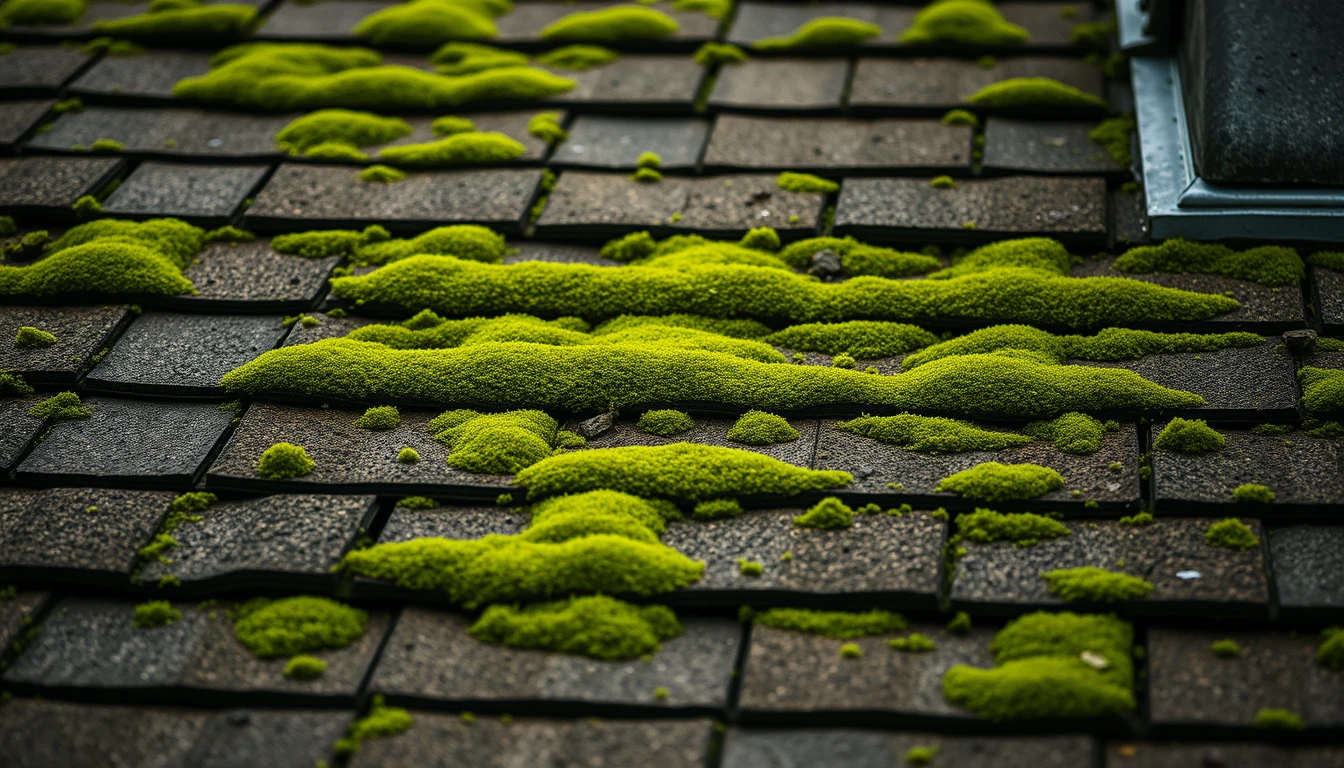
A bit of moss on a roof makes some homeowners panic, while others ignore it completely. Neither reaction is quite right. Some moss is genuinely harmless, although some quietly causes damage every time it rains. This guide explains how to tell the difference and what to do about it.
When moss is just cosmetic
A light scattering of moss, especially on a north-facing slope, is extremely common. Concrete and clay tiles are porous by design. A fine layer of moss or algae on the surface is mostly a cosmetic issue. If your roof looks green but nothing sags and the gutters stay clear, it’s probably cosmetic. The same is true if there’s no damp staining inside, since real problems rarely stay invisible.
When moss actually causes a problem
The problem starts once moss builds into thick cushions rather than a thin film. At that point it can cause real damage in several ways, since a thick mat traps far more water than a light dusting ever will:
- Holding water against the tile surface for long periods, which speeds up freeze-thaw damage on porous concrete tiles over winter
- Lifting tile edges as clumps grow under the overlaps, breaking the weathertight seal between courses
- Blocking the channels tiles rely on to shed water, pushing rain sideways under the tile instead of off the roof
- Clogging gutters and downpipes when it washes off in clumps during heavy rain, so water backs up at the eaves
Damp loft patches, proud-sitting tiles, or gutters needing frequent clearing are all reasonable signs of thick moss. It’s worth having roof repairs check them as part of a wider inspection. If it’s been a while since your last check, it’s worth reading further. Our guide on how often to inspect your roof explains the general rule.
Why pressure-washing is the wrong tool
It’s tempting to hire a pressure washer and blast the roof clean in an afternoon. Trade guidance is consistent: don’t. High-pressure water can strip the protective surface off tiles and dislodge pointing at ridges and hips. It can even force water up underneath the tiles instead of off them, according to Feel the Pressure’s roof cleaning advice. Sometimes that creates a leak that wasn’t there before. The National Federation of Roofing Contractors has issued a similar warning. High pressure, it says, can shorten a tile’s working life, particularly on older or more porous materials.
There’s also a practical risk. Someone walking on wet, mossy tiles with a pressure washer in hand causes plenty of accidents.
Safer ways to deal with it
| Method | How it works | Best for |
|---|---|---|
| Manual removal | Gently brushing or scraping moss off by hand from a ladder or roof, working from ridge to eave | Light, isolated patches |
| Biocide treatment | A chemical wash kills moss and algae at the root; dead growth washes away naturally over subsequent rain | Most residential roofs with moderate coverage |
| Soft/steam washing (e.g. DOFF-style systems) | Controlled low-pressure hot water or steam lifts growth without the force of a pressure washer | Heavier build-up where a gentler mechanical clean is needed |
Biocide treatment for a typical semi-detached roof costs roughly £150-£400, depending on roof size and access. Figures are from Checkatrade’s guidance on roof moss. That’s a modest cost, since DIY pressure washing risks far more expensive tile damage.
Why some roofs get more moss than others
Moss needs moisture and shade to establish, which is why some roofs attract it faster than others.
- North-facing slopes get less direct sun, so they stay damp for longer after rain
- Roofs under or near trees get extra shade and a steady supply of organic debris for moss to root in
- Riverside and low-lying areas tend to hold higher ambient humidity, which slows natural drying between wet spells and gives moss a better foothold
Parts of Maidenhead close to the Thames fit that riverside pattern well. The same is true of low-lying stretches around Camberley. None of that makes moss inevitable. It means those roofs need checking a little more often than an exposed, south-facing one.
A simple way to keep on top of it
Treating moss doesn’t mean it’s gone for good. Spores travel on the wind and can return within a couple of damp years. A few habits make a real difference between treatments.
- Trim overhanging branches back where practical, since more sunlight and airflow across the tiles slows regrowth
- Clear gutters at least once a year, ideally in autumn once most leaves have fallen
- Have the roof looked at every year or two, even after treatment, so any regrowth is caught while it’s still a light film
Clearing gutters ties in with wider guttering, fascias and soffits upkeep. Our guide on gutter cleaning vs gutter replacement explains how often that job is worth doing. If gutters or fascias are already showing wear, that’s worth checking too. Our piece on repairing vs replacing guttering and fascias covers when a repair is enough.
Moss left untreated for years, combined with lifting or cracking tiles, can be one of the seven signs your roof needs replacing. Sometimes it points to replacement rather than simple cleaning. Porous concrete and clay tiles are more moss-prone than natural slate. Our comparison of slate vs tile roofing covers that difference in more depth. If moss has already caused damage, it’s worth reading further still. Our guide on roof repair vs roof replacement helps you work out which one you need.
If you’re not sure whether the moss on your roof is cosmetic or worth treating, we’re happy to take a look. We’ll give you a straight answer either way. Get in touch for a free quote and we’ll tell you plainly whether it needs treating.