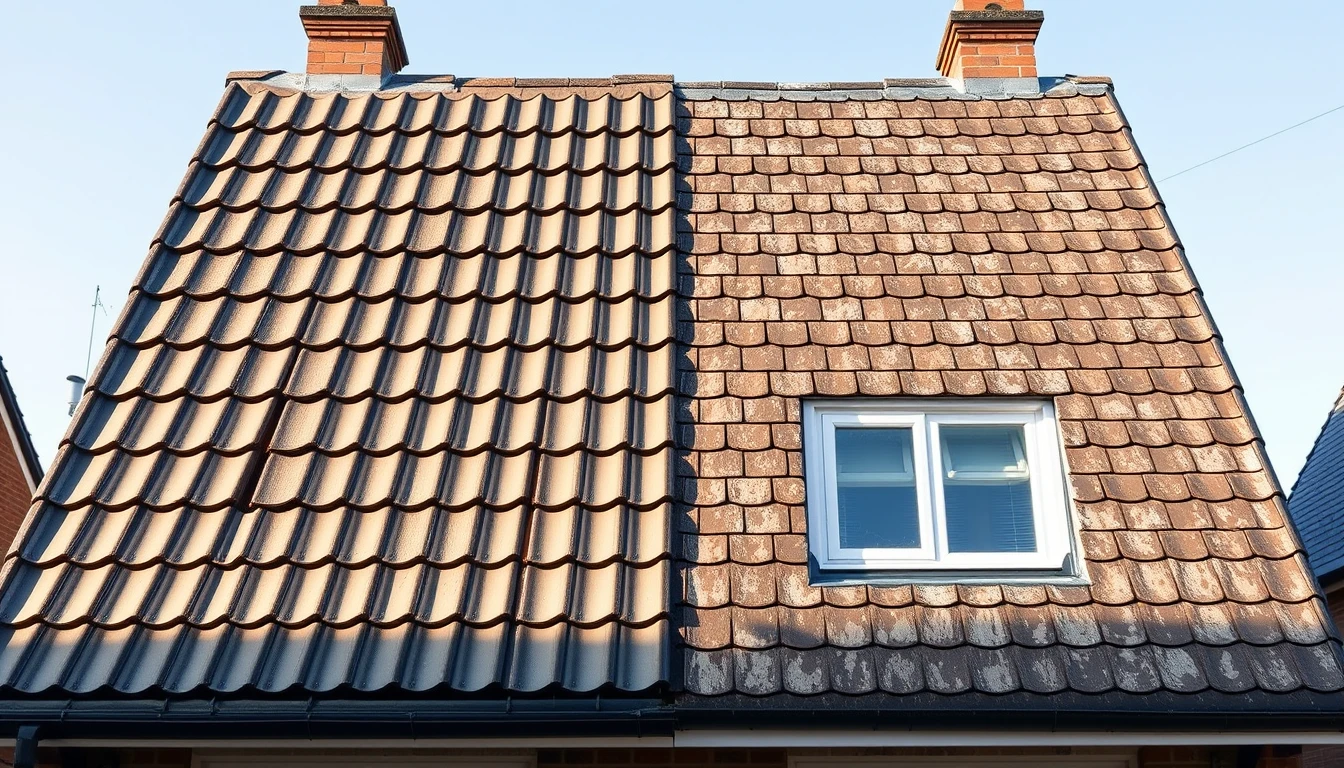
Every roofer gets asked this on a customer’s driveway: is it worth fixing, or should we just replace it? There’s no single right answer. However, there is a sensible way to work through it, rather than just guessing.
Start with the age of the roof
Roofing materials have a rough working life. Where you sit in that lifespan matters more than almost anything else. Fix My Roof’s UK lifespan guide puts typical figures at:
- Concrete tiles: 40–60 years
- Clay tiles: 60–100 years
- Natural slate: 80–150+ years, and can pass a century with proper care, according to the HomeOwners Alliance
- Felt or membrane underlay: often only 15–20 years, well short of the tiles above it
That last point matters more than people realise. A roof can look fine from the tiles down. However, if the felt underneath has failed, water gets in regardless of how good the covering looks.
How much of the roof is actually affected
Sometimes the damage is localised: a few slipped tiles on one slope, one bit of cracked flashing. A repair is almost always the right call here. The question gets harder once damage spreads across several areas. That’s because you start fixing the same symptom in different places, rather than the underlying cause.
UK roofers commonly use what’s called the 25% rule. If more than around a quarter of the roof surface shows real damage, full replacement usually beats another round of patching. That’s explained in Nationwide Roofing Southern’s decision guide. It’s a rule of thumb, though, not a strict formula. A roof with 15% damage can still need replacing, if the underlay has failed everywhere. A roof with 35% damage in one plane can sometimes be repaired sensibly. It’s a starting point for the conversation, not the final word.
The cost-based version of the same rule
There’s a related, more useful way to think about it. If a quote for further roof repairs comes in above roughly 30% of the cost of a full re-roof, replacement tends to win out long-term. A roof already needing costly repairs is likely to need more of them soon. Patching tiles and flashing of several different ages also doesn’t weatherproof as well as a single-age roof. Most manufacturer warranties assume a whole-roof job too, not a partial one.
Frequency of repairs is a signal on its own
Have you called a roofer out for the same roof three times in two years? That’s telling you something, even if each repair was small and fairly priced. A pattern of repeats, especially around the same area, usually points to an underlying problem. Perished underlay, a batten issue, or general age are common culprits, and a fresh patch won’t fix any of them for good.
Timber condition is the deciding factor
None of the above matters much once the roof timbers themselves are rotten or weak. Rot in rafters or joists, or a visibly sagging ridge line, is a structural issue rather than a cosmetic one. It usually pushes the decision firmly towards replacement. You simply can’t re-lay a covering safely onto timber that isn’t sound, whatever the tiles look like.
What about insurance and warranties?
Is the damage storm-related rather than gradual wear? If so, check with your insurer before deciding either way. Buildings insurance typically covers sudden storm damage but not general wear, and that distinction can change which option makes more sense once the insurer’s share is counted. It’s also worth asking any roofer quoting for a repair about your warranty. Unapproved repairs can void or cut some warranties, mainly on modern tile or membrane systems.
Don’t forget building regulations on bigger jobs
Sometimes a repair tips over into replacing a substantial part of the roof — broadly, more than around a quarter of it. If so, the rules may require you to tell your council’s building control team. Insulation may also need bringing up to current standards under Part L, according to Planning Portal’s guidance on building regulations for roof work. This is worth knowing before you agree to a “repair” that’s really edging towards a partial replacement, since it changes both the cost and the paperwork involved.
A simple way to think it through
- How old is the roof relative to its material’s expected lifespan?
- Is the damage in one place, or spread across the roof?
- Have you needed more than one repair in the last couple of years?
- Is there any sign of the underlay or timber failing, not just the tiles?
If most of your answers point one way, that’s your answer. Our guides on how often your roof needs inspecting and seven signs your roof needs replacing help build up that picture before you call anyone out. Moss is a common extra factor too. Our piece on safely removing moss from a roof explains when it’s cosmetic and when it isn’t. If you’d rather see actual numbers, our new roof cost guide and roof repair cost guide cover both sides of the decision. Older properties, in particular, may find our piece on re-roofing a 1930s semi in Reading useful context.
If you’re in Basingstoke or around Newbury and genuinely can’t tell which category your roof falls into, that’s exactly the kind of thing worth a proper look. Don’t just guess at it over the phone.
Whether it’s a straightforward repair, or the roof’s reached the point where re-roofing makes more sense, we’ll give you a straight answer, not just whichever job is bigger. Get in touch for a free quote, and we’ll tell you honestly what your roof actually needs.