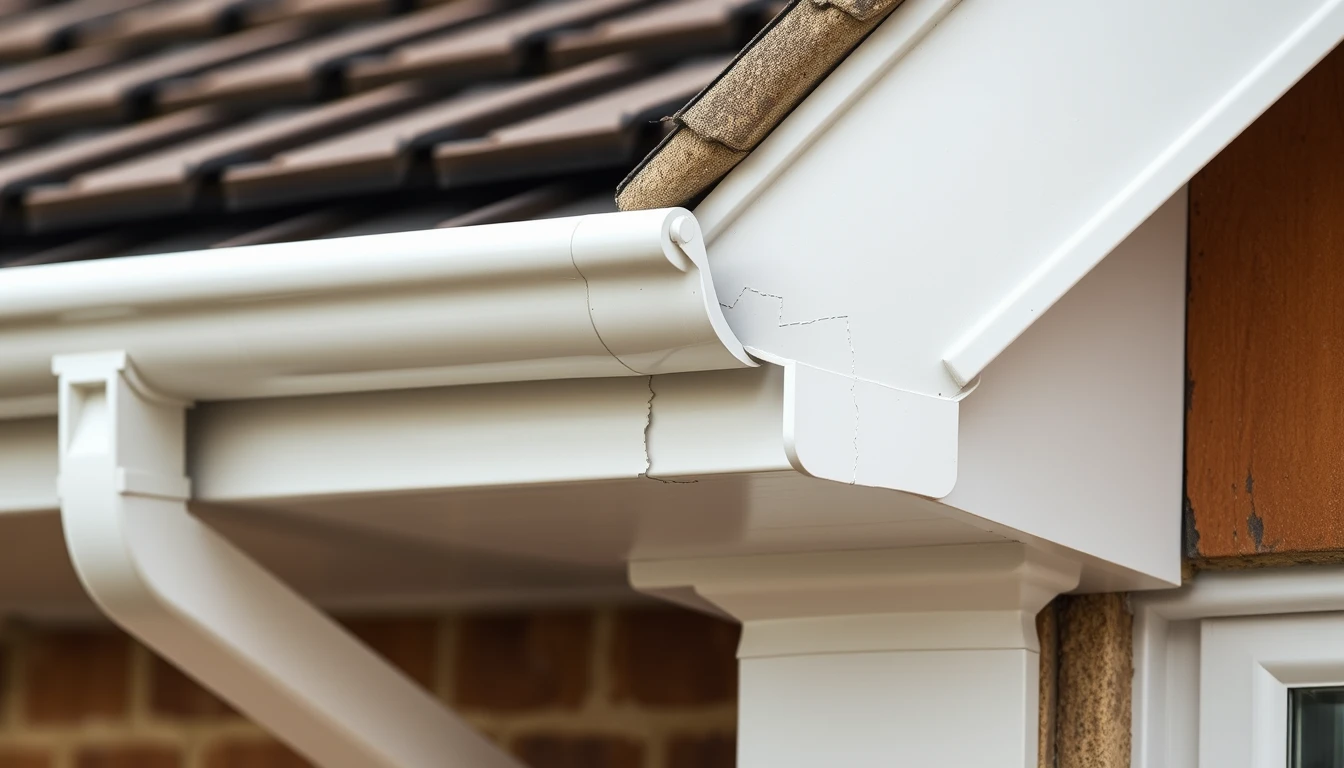
A dripping gutter joint or a slightly sagging section doesn’t automatically mean the whole run needs replacing. However, it isn’t always a five-minute fix either. The honest answer depends on the age of the system and how localised the problem is. It also depends on what’s happening behind the fascia board that you can’t see from the ground.
When a repair makes sense
Guttering fails in specific, contained ways most of the time. Most of those are genuinely repairable without touching the rest of the run:
- A single leaking joint — usually just needs the union reseating or resealing, sometimes replacing the seal itself
- One sagging section between brackets — often a bracket has come loose or corroded; adding or replacing brackets restores the fall without new guttering
- A blocked or overflowing gutter — this isn’t a fault at all, just maintenance; clearing debris usually resolves it completely
- A cracked short section — can often be cut out and replaced in the existing system if the guttering profile is still available
If the rest of the run is sound, uPVC guttering in reasonable condition can last 20 to 25 years on a sheltered elevation. It can fail as early as 12 to 15 years on a south-facing or heavily exposed run. A localised repair on a system still within that window is usually the sensible call, rather than replacing something with years left.
When replacement makes more sense
Some signs point to the system being past its useful life, rather than having a single fault:
- Multiple sections sagging or pulling away from the fascia across the run, rather than one isolated spot
- Visible discolouration, brittleness, or cracking in the plastic itself — uPVC does degrade with UV exposure over decades, and once it’s brittle, repairs don’t hold
- A system old enough to be near or past its expected lifespan — uPVC guttering, fascias and soffits are generally rated for 25–30 years, with premium systems pushing 40+
- Recurring leaks at multiple joints rather than one, which suggests the whole system has reached the point where seals are failing generally
For a typical semi-detached house, full replacement of guttering, fascias and soffits in the UK generally runs to £100–£150 per linear metre installed. Most jobs land around £2,500–£4,500 all-in, depending on the size of the property. That’s a meaningful cost, which is exactly why distinguishing a genuine end-of-life system from one isolated fault matters. There’s no reason to replace a sound run because one bracket has failed.
| Repair | Full replacement | |
|---|---|---|
| Typical trigger | One joint, bracket, or section failing | Multiple sections failing, or system near/past 25–30 year lifespan |
| Cost | Usually low — a call-out plus materials for the affected section | £100–£150 per linear metre, ~£2,500–£4,500 for a typical semi |
| Time on site | Usually same-day | Typically 1–3 days depending on property size |
Warning signs of rot behind the fascia
This is the part that’s easy to miss. The fascia board itself can look fine from the ground while the timber behind or underneath it is already failing. Watch for:
- Soft or spongy timber if you can safely press it, or ask your roofer to check while they’re up there for another reason
- Peeling paint that won’t take a fresh coat, which often means moisture is getting into the timber from behind rather than it just needing a repaint
- Staining or watermarks on the soffit underneath a gutter that’s been overflowing for a while — this is usually the first visible sign of water getting behind the guttering
- Signs of pest activity — timber fascias that have started to soften are an easy entry point
Rot behind a fascia is cheap to catch early and expensive to leave. By the time it’s visibly sagging, the timber underneath has usually been compromised for a while. Not sure whether an overflow has caused damage? Our guide to gutter cleaning versus replacement covers how to tell a blockage from a genuine fault.
If you’re in Basingstoke, or further over towards homes around Camberley, it’s worth a proper look rather than guessing from the ground. Get in touch about guttering, fascias and soffits and we’ll give you an honest answer either way.
A sensible approach if you’re not sure
If you’re weighing this up yourself, start by working out roughly how old the current system is. Building regulations certificates, a previous homeowner’s paperwork, or knowing when an extension or re-roof happened can put a rough date on it. If it’s under 15 years old and only one section is causing trouble, a repair is almost always the right call. If it’s approaching or past 25 years, and more than one section is showing problems, get a full assessment. That beats chasing individual leaks one at a time. Several separate repair callouts over a couple of years can end up costing close to doing the whole run properly once.
It’s also worth having fascias and soffits checked at the same time as any guttering work, even if they look fine. The fascia sits directly behind the gutter. It’s usually the first thing affected if a gutter has been overflowing or leaking for a while. Catching early softening in the timber during a guttering job is far cheaper than dealing with it as a separate repair later. While you have access arranged, it’s also worth having the roof itself looked at. Our guide to how often you should have your roof inspected covers a sensible schedule. Our piece on safe moss removal is useful, too, if moss has been building up on the covering above the guttering.
Don’t ignore a single symptom for too long
One situation is worth avoiding: leaving an isolated fault unaddressed because it “still mostly works.” A failed bracket puts strain on the brackets either side of it. A joint that’s slowly leaking is slowly saturating the timber behind it every time it rains. What starts as a five-minute repair can, over a couple of wet winters, turn into a much bigger job. The fascia board behind it often needs replacing too. That’s a needlessly larger job than it had to be. The same logic applies after a storm. Our guide to spotting storm damage after high winds is worth a look if a recent gale may have caused the damage. Storm-related faults sometimes qualify for insurance cover instead of a routine repair bill.
A flat-roofed extension or garage feeding the same run is worth a mention here. Flat roof coverings shed debris differently than a pitched roof. That sometimes explains a gutter that blocks more often than the rest of the house. If the guttering issue connects to a nearby chimney stack, our guide to chimney repointing and leadwork explains how that junction stays watertight. It’s also worth checking general roof repairs if the fault has affected the roofline above it.
If you’d like a straight recommendation, get a free quote and we’ll come and assess it properly.