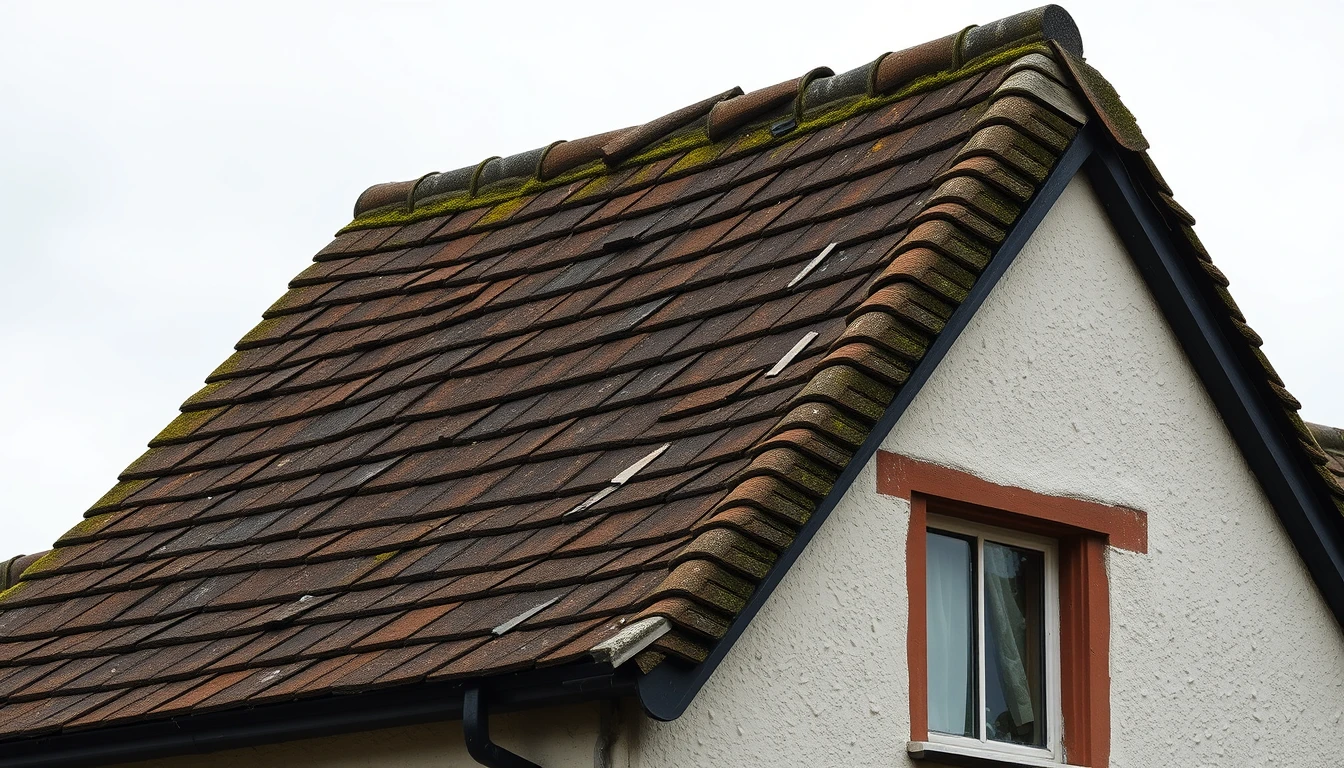
Most roofs don’t fail overnight. They give warning signs for months, sometimes years, before a leak shows up inside the house. Here’s what to actually look for, rather than waiting for water to come through the ceiling.
1. A sagging ridge line
Stand back from the house and look along the roofline. If it dips or wanders, rather than running dead straight, that’s not just cosmetic. Since it usually points to a problem with the rafters or joists underneath, it’s worth taking seriously. The HomeOwners Alliance flags a sagging ridge as one of the more serious structural warning signs.
2. Daylight coming through the loft
Go up into the loft on a bright day, with the lights off. If you can see daylight, or feel a breeze, there’s a gap somewhere. Water can get through that same gap, since it doesn’t discriminate. It’s only a matter of time.
3. Granule loss and bare patches on tiles
Concrete and some clay tiles shed a fine granular surface as they age. A bit of colour fading is normal. However, bald, smooth patches mean the tile’s protective layer has clearly worn away. That section is more vulnerable to frost and water damage.
4. Widespread moss and dislodged tiles
A little moss on a north-facing slope is common, although it’s not a big deal on its own. The problem starts when moss builds up thickly enough to lift tiles slightly and trap moisture against the roof. The HomeOwners Alliance guide notes that established moss growth can displace tiles and create new entry points for water. If you’re dealing with moss already, our guide on safely removing moss from a roof can help. It covers what’s safe to do yourself and when to call someone in.
5. Repeated leaks in different spots
One leak is a repair. Leaks that keep appearing in different places usually mean the underlying felt or membrane has failed more generally. The same goes for a leak that returns to the same spot after being fixed, and patching the visible symptom won’t fix that.
This applies just as much to flat roofs as pitched ones. Our comparison of flat roof options is worth a look if that’s what you’re dealing with.
6. Roof age against its expected lifespan
Every material has a rough working life, since none of them last forever. According to Fix My Roof’s UK roofing lifespan guide:
- Concrete tiles: around 40–60 years
- Clay tiles: around 60–100 years
- Natural slate: 80 years, and often well beyond a century with good care
If your roof is at or past the upper end of its material’s range, ongoing patch repairs are delaying the inevitable. A full re-roofing job is likely on the horizon anyway, so it’s worth talking to a roofer sooner rather than later. Our new roof cost guide has real UK prices to help you plan. Older properties tend to need this conversation sooner, and our piece on re-roofing a 1930s semi in Reading is a good starting point.
7. Damp patches or bubbling paint on ceilings
By the time you see this from inside the house, water has already been getting in for a while. It often tracks sideways along a rafter before it shows up on the plasterboard below. Usually, this is a sign the problem is more advanced than it looks from outside.
Why this shows up more in Camberley
Camberley’s wooded streets and mature tree cover are lovely, although they come at a cost. Roofs here collect more leaf litter, debris and shaded damp than a roof on an open estate. That combination is exactly what moss needs to establish itself. It’s worth checking your roof more often here than the average UK guide suggests, especially after autumn.
A quick way to check your own roof
You don’t need to get on a ladder to do a basic check. From ground level, on a dry day, walk around the property. Look for an uneven or dipping ridge line, patches of different tile colour, and visible moss, especially on north-facing slopes. Check for any tiles that look out of alignment with their neighbours too.
From inside, check the loft with the lights off during daylight for pinpricks of light. Run a hand along visible rafters for damp or soft timber too. None of this replaces a proper inspection, still it’s a reasonable first pass.
How roof age interacts with the other signs
None of these seven signs exist in isolation from the age point above. A five-year-old roof with a bit of moss is very different from a fifty-year-old concrete tile roof with the same moss. The older roof sits much closer to, or past, the end of its working life. As a result, the moss is more likely to be compounding an existing problem. This is part of why a fair assessment looks at a roof’s age and history together, rather than treating each sign as a standalone verdict.
What to do if you spot two or more of these
One sign on its own might just need a small repair, covered in our roof repair vs replacement guide. Two or three together are usually worth a proper inspection instead, especially on a roof getting on in years. Don’t wait for a leak to force the issue. High winds can accelerate several of these signs at once, so it’s worth reading how to spot storm damage after bad weather too.
If you’re in Camberley or around Wokingham and any of this sounds familiar, our roof repairs team can take a proper look. Get in touch for a free quote and we’ll tell you honestly what you’re looking at.