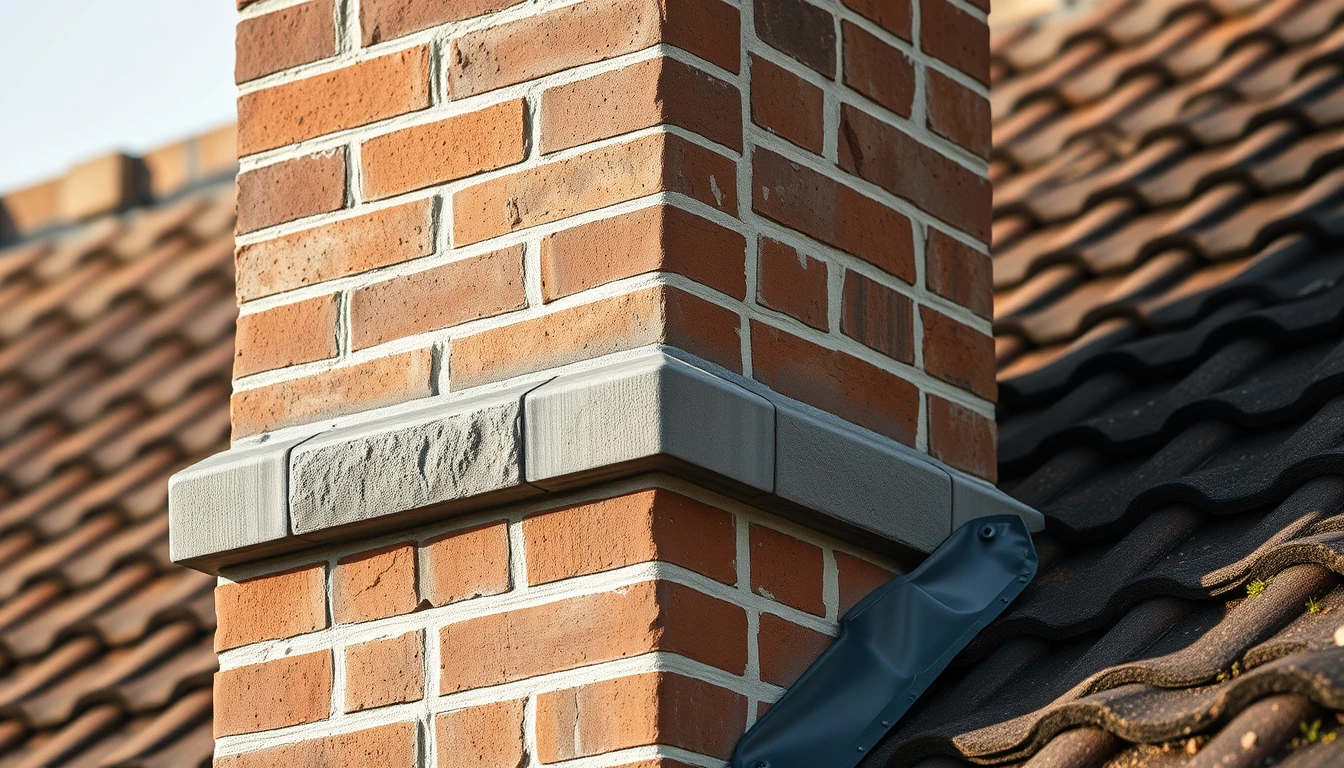
Chimney stacks take more weather punishment than almost any other part of a house. They sit at the highest point of the roof, exposed on all sides. They’re also built from small individual units of brick and mortar, rather than one continuous surface. Two jobs come up again and again on older stacks: repointing and leadwork. They’re related, but not the same thing.
What repointing actually is
Brickwork is only as sound as the mortar holding it together, and that mortar erodes over time. It erodes faster on a chimney than almost anywhere else on the house. There’s no roof covering up there to shelter it from rain, frost and sun. Repointing means raking out the old, crumbling mortar to a consistent depth, then replacing it with fresh mortar. That re-establishes a weathertight, structurally sound joint.
It matters more than it might sound. Once pointing has eroded past a certain depth, water gets directly into the joint. In winter, that water freezes and expands, widening the gap with each cycle. Left long enough, this doesn’t just cause damp. It starts to compromise the stack’s structural stability, since mortar transfers load between courses of brick, not just keeps water out.
Typical cost: repointing a chimney in the UK generally runs £300 to £1,000, with £750 being a reasonable average. The low end covers a small, easily accessed stack on a single-storey roof. The higher end covers a taller stack needing scaffolding over the ridge. Access is usually the biggest single factor in the price, more so than the amount of mortar actually being replaced.
What chimney leadwork does
Where the chimney meets the roof, there’s a physical gap between two different materials: brick stack and tiled or slated roof. That junction is the single most vulnerable point on the roof for water ingress. Lead flashing bridges the gap. It’s dressed, meaning shaped by hand, around the base of the stack and tucked into the brick joints. That forms a weatherproof seal that also allows for the slight, constant movement between roof and chimney, which a rigid mortar fillet can’t handle.
Roofers choose lead because of how it performs over decades, not just because it’s traditional. Properly installed lead flashing that meets British Standard BS EN 12588 typically lasts 60 to 100+ years. Some sources put the average lifespan of a well-installed lead roof detail at around 150 years, given lead’s resistance to corrosion. When leadwork fails prematurely, the cause is almost always an installation issue, such as the wrong gauge of lead or poor detailing at the joints, rather than the material simply wearing out on schedule.
| Repointing | Leadwork | |
|---|---|---|
| What it fixes | Eroded mortar between bricks | The junction between chimney and roof covering |
| Typical lifespan before attention needed | Mortar can start eroding within 15–25 years depending on exposure | 60–100+ years when correctly installed |
| Typical UK cost | £300–£1,000 | Varies by size and access; usually quoted alongside a chimney repair |
| What failure looks like | Damp patches on the chimney breast, crumbling mortar you can pick out by hand | A leak specifically where the chimney meets the roofline, often worse in heavy rain |
Signs a stack needs attention
- Mortar joints that look recessed, crumbly, or missing compared to the surrounding brickwork
- A damp patch on a chimney breast wall inside the house, particularly one that only appears during or after heavy rain
- Green staining, moss, or efflorescence (white powdery deposits) running down the brickwork below the stack
- Visible daylight or gaps where the lead meets the brick, seen from a loft space below the chimney
- A chimney stack that looks slightly out of true, which can indicate the mortar has degraded enough to affect structural stability, not just weatherproofing
If you spot any of these, get a proper look before it turns into an internal leak. Our guide to why chimneys leak walks through the most common causes and how each one gets diagnosed. Get in touch for chimney repairs and we’ll tell you honestly whether it’s pointing, leadwork, or both.
When it’s worth a wider roof check
A chimney rarely fails in isolation, so it’s worth having the roof around it checked at the same time. This often turns up other jobs, from general roof repairs to work on the covering itself. How often you should have your roof inspected covers a sensible schedule. Pairing that with a chimney check catches problems while they’re still cheap to fix.
If the stack sits on older slate or tile, our comparison of slate versus tile roofing is useful background. The covering and the chimney tend to age together. And if you’re weighing up costs generally, our guide to roof repair costs in Reading gives a wider sense of typical pricing.
Newbury’s older stacks
Newbury’s market-town centre and surrounding villages have no shortage of Georgian and Victorian brick chimneys. Many are still on their original pointing or leadwork from decades, sometimes over a century, ago. Older stacks like these are exactly where this kind of check pays off. Erosion that’s been building for years can look like a minor cosmetic issue until it isn’t.
The same is true further along the valley in Henley-on-Thames, where similar period properties carry the same risk. Anyone re-roofing an older property, such as our recent work on a 1930s semi in Reading, should get the chimney checked as part of the same job. It’s also worth arranging a look at guttering, fascias and soffits while access is sorted, since scaffolding for a chimney job makes that an efficient add-on.
If you’re in Newbury and your chimney hasn’t had a look in a while, it’s worth getting ahead of it. Don’t wait for a leak to show up on the ceiling below. Get in touch and get a free quote — we’ll take a proper look at the stack and tell you plainly what needs doing.