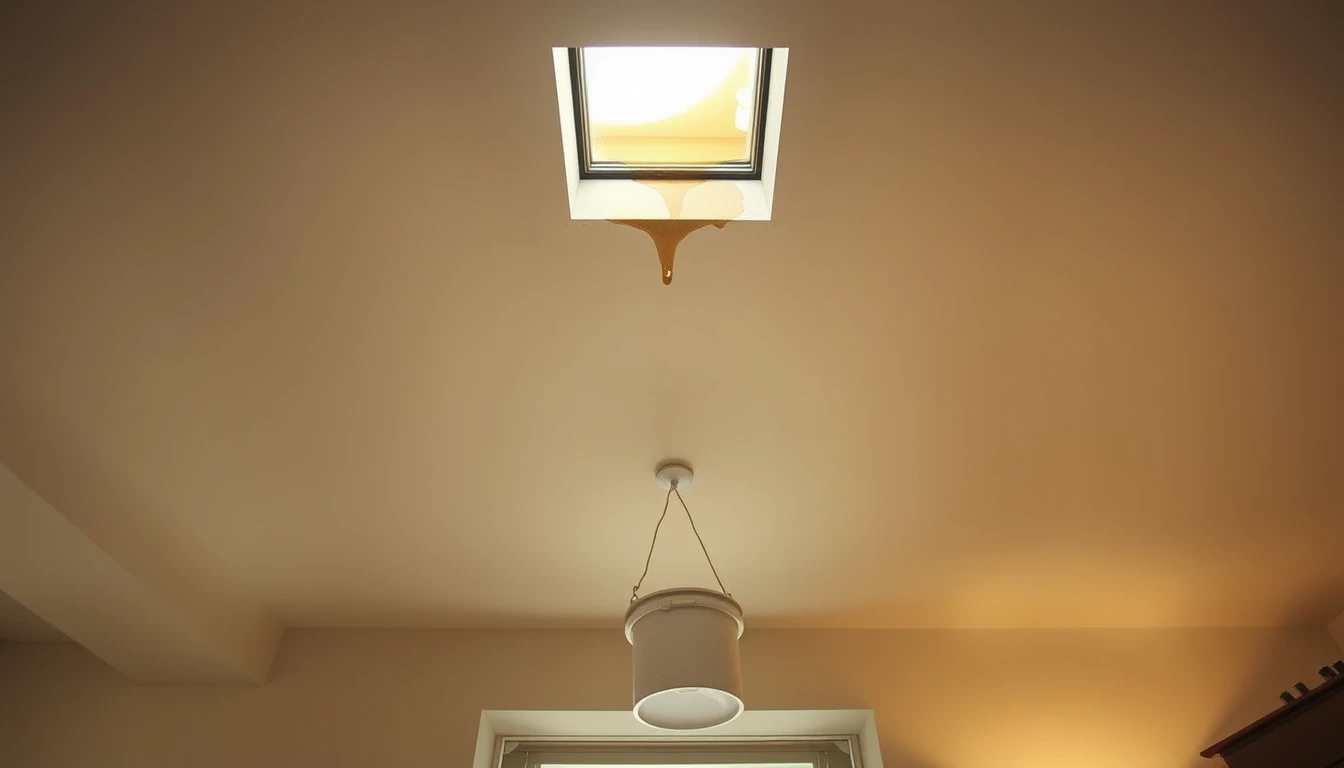
A leak starting mid-storm is stressful. However, the actual list of things you need to do is short. Work through it in order, and you’ll limit the damage without putting yourself at risk.
1. Contain the water first
Move anything valuable out of the way. Then get a bucket, bowl or towels under the drip. If water’s coming through a light fitting or anywhere near electrics, don’t touch it. Switch off the relevant circuit at the consumer unit if you can do so safely. Treat that as the top priority on this list.
2. Try to find the source, but only from inside
Water often travels along a rafter or joist before it drips. Because of this, the wet patch on your ceiling isn’t always directly under the actual hole. If you can safely get into the loft, take a torch.
A dry day helps you spot the point of entry. Look for a damp patch on the underlay, or a gap where daylight shows through. Mark it if you can, since it’ll help whoever comes to fix it later.
3. Don’t go up onto the roof yourself
This is the one non-negotiable step. A wet, damaged roof is not a safe place to stand. That’s especially true in the dark, in a storm, or without the right equipment. Temporary weatherproofing from outside needs proper access equipment and real experience. It’s not a job for a ladder and a tarpaulin on a windy afternoon.
4. Photograph everything for insurance
Before you clean anything up, take clear photos and, ideally, a short video. Capture the leak itself, the water damage inside, and anything visible from the ground outside. According to Howden Insurance’s guide to home insurance and roof leaks, most UK buildings insurance covers roof damage from a sudden, unforeseen event, such as a storm. It typically excludes damage that’s really down to poor maintenance, or a problem that had been building for a while.
Documentation of the damage as it happened genuinely helps your claim. So does any record of recent roof maintenance. MoneySuperMarket’s guide makes a similar point: keep before-and-after photos and any repair receipts, especially if you need emergency work done straight away.
5. Call your insurer, and call a roofer
Contact your insurer as soon as you reasonably can, ideally before arranging permanent repairs. Still, if the situation is genuinely urgent, insurers generally understand that immediate action was necessary. Most will still consider the claim.
At the same time, get a roofer out for an emergency callout. A same-day or next-day response is usually about temporary weatherproofing first, such as a tarp or a temporary patch. The permanent fix gets scheduled in once the weather allows and any parts are sourced.
Why this matters even on newer estates
It’s easy to assume leaks are an old-roof problem, but newer housing gets them too. Usually it’s not the tiles themselves at fault. More often it’s flashing or valley details that weren’t finished quite right, or that have moved slightly over time. Bracknell has plenty of newer estates built over the last few decades. We still get called out to leaks there that trace back to a valley junction or a flashing detail, rather than an old, worn-out covering.
What if it’s a shared or leasehold property?
If you’re in a flat, or a property with a shared roof, check who’s actually responsible before arranging repairs yourself. This is often the freeholder or managing agent, rather than the individual leaseholder. That’s particularly true for the main roof structure over a block.
Doing the immediate containment steps above is still sensible, regardless of ownership. However, arranging and paying for the permanent repair may not be your job. Check your lease, or contact the managing agent, as soon as it’s safe to do so.
Once the immediate danger has passed
After the leak is contained and the source identified as best you can, resist the urge to fully dry everything out and repaint. Wait until your insurer or roofer has seen it, if you’re planning to claim. Ventilate the affected room to cut the risk of damp and mould. Still, keep the photographic record from step 4 as your main evidence.
Drying things out too fast can make it harder to show the extent of the original damage. If storm damage more broadly caused the leak, our guide on what home insurance covers for storm damage explains what to expect from a claim.
Quick reference
- Contain the water, protect belongings, and cut power to any affected circuit
- Look for the source from inside only — never go on the roof yourself
- Photograph and video the damage before cleaning up
- Contact your insurer, keeping records of maintenance and repairs
- Get a roofer out for temporary weatherproofing, then a permanent fix
If a leak follows a storm, it’s worth checking your roof more broadly for other damage. Our guide on how to spot storm damage after high winds covers what else to look for. A leaking chimney is one of the more common culprits too, specifically covered in why is my chimney leaking.
If gutters are overflowing as well, our comparison of gutter cleaning vs replacement explains the difference. Not every leak is a genuine emergency either. Our guide on what counts as an emergency roof repair in Reading is worth reading if you’re unsure. For repair costs once the panic’s over, see our roof repair cost guide.
If you’re dealing with a leak right now in Bracknell or around Wokingham, get in touch for a free quote. We’ll talk you through next steps and get someone out to make it safe. Our roof repairs team handles the permanent fix once the emergency’s dealt with.