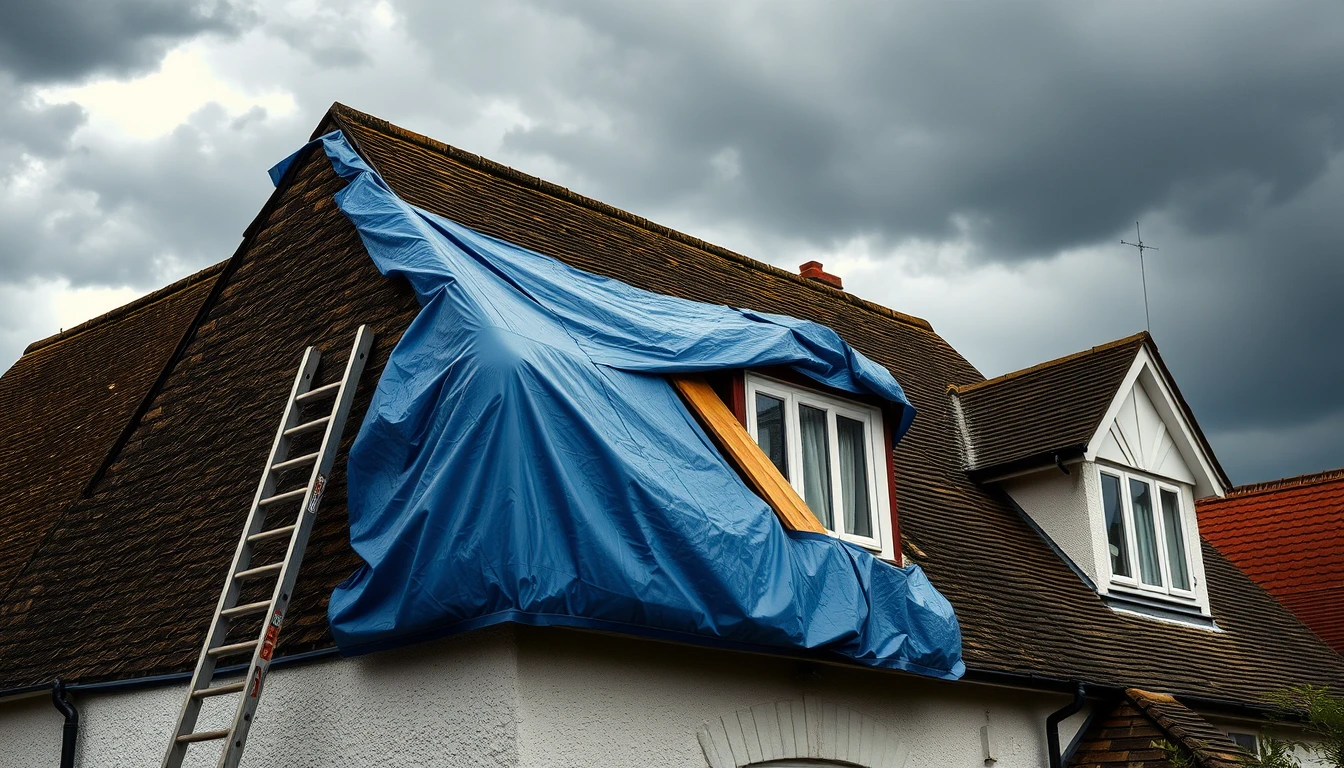
Not every roof problem is an emergency, although some truly are. It’s worth knowing the difference. That way, you’re not waiting anxiously over something that can genuinely hold. It also means you know when to push for a same-day response.
What actually counts as an emergency
A handful of situations justify an urgent, same-day or next-day callout:
- Active water coming into the house. Water dripping through a ceiling, running down a wall, or pooling in the loft during or after rain needs attention now, not next week, since every hour it continues adds to the damage.
- Missing tiles exposing the felt or timber underneath. A slipped tile is awkward. A gap where tiles have come off completely means the roof has effectively no weatherproofing at that point, and will let water in with the next rainfall.
- A storm-loosened chimney stack. A chimney that’s visibly moved, shedding brickwork, or has loose pots after high winds is a safety issue as much as a roofing one. Falling masonry is genuinely dangerous, and this should be treated as urgent.
- Water ingress anywhere near electrics. Water tracking towards a light fitting, consumer unit, or any wiring is a safety risk that overrides normal scheduling, full stop.
What can usually wait for a normal booking
Plenty of roof issues look worrying but aren’t actually urgent:
- A single slipped or cracked tile that isn’t letting water through
- Cosmetic moss or algae growth
- Minor gutter blockages without active overflow into the building
- A small, contained, dry area of damage discovered during a routine check
These are all worth booking in and getting fixed properly. Left long enough, several of them can turn into the first type above. Still, they don’t need a roofer dropping everything to attend the same day.
What a genuine emergency response actually involves
It’s worth knowing what “emergency repair” means in practice. It’s not usually the same as the permanent fix:
- Temporary weatherproofing first. In most cases, the priority on a same-day visit is to stop further water getting in, typically with a secured tarpaulin or a temporary patch, rather than a full permanent repair completed there and then.
- A proper assessment. While making the roof safe, a competent roofer also identifies the full extent of the damage, not just the bit that’s visibly failing.
- A scheduled permanent fix. Once the roof is weathertight, the actual repair — new tiles, flashing, or in more serious cases a larger section of re-roofing — gets booked in properly, as part of a normal emergency roof repairs callout.
- Paperwork for insurance if relevant. As covered in our emergency leak steps guide, photos of the damage and the temporary repair carried out are worth keeping for any insurance claim. Our guide on what home insurance covers for storm damage explains what insurers typically expect.
Why Maidenhead sees a fair bit of this
Maidenhead’s riverside location means the town gets more than its share of heavy rain and storm runoff. Properties near the river, or on lower ground, can see issues escalate quickly. That’s especially true once water starts pooling rather than draining away. This is one reason a fast, genuine emergency response matters here more than it might inland. A delay of even a day or two after a storm can turn a contained problem into a much bigger one. Our guide on spotting storm damage after high winds is worth reading straight after any bad weather.
What a genuine emergency callout typically costs
Emergency work usually carries a premium over a standard booked-in job. That’s mainly because it means reorganising a schedule at short notice, often around bad weather. MyJobQuote’s roof leak repair data suggests urgent, out-of-hours or short-notice work can add roughly £100 to £300 on top of standard pricing. That’s on top of the underlying repair cost, once it’s properly assessed. Our roof repair cost guide has typical figures for non-emergency work.
It’s a fair trade-off against a leak causing damage for days while you wait for a normal slot. Still, it’s worth knowing upfront that “emergency” and “cheap” don’t usually go together.
If you’re not sure whether it’s urgent
When in doubt, the safest approach is to ask. Describe what you’re seeing: active dripping, exposed timber, or movement in a chimney stack. A roofer should tell you fairly quickly, over the phone or by photo, whether it needs same-day attention. A leaking chimney has its own specific causes, covered in why is my chimney leaking.
Sending a couple of clear photos, taken safely from the ground or an upstairs window, usually speeds this up. Whatever the outcome, choosing a trustworthy roofer matters just as much in an emergency as for routine work. A rushed decision is exactly when a poor choice costs the most.
If you’re dealing with storm damage or a leak in Maidenhead or around Henley-on-Thames, get in touch for a free quote. We’ll help you work out what’s genuinely urgent, and get it made safe. Our roof repairs team takes it from there once the immediate danger’s passed.